If you’re a retailer using Square for in-store sales and Shopify for online selling, this question naturally comes up: Does Square have full integration with Shopify?
The short answer is no – not natively.
The long answer is where things get interesting, especially if you’re serious about omnichannel retail in 2026 and beyond.
This blog breaks down what “full integration” really means, where Square and Shopify fall short on their own, and how retailers can bridge the gap without changing their existing systems.
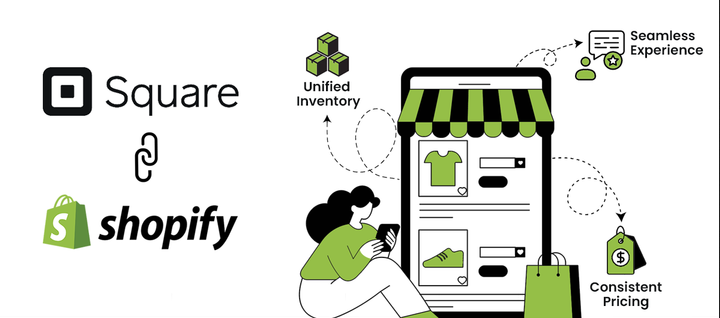
Why Retailers Want Square–Shopify Integration
Modern shoppers don’t distinguish between online and in-store anymore. They expect:
- Accurate stock availability
- Consistent pricing
- Fast fulfillment
- Flexible pickup and delivery options
Retailers, on the other hand, want:
- One source of truth for inventory
- No spreadsheets
- No duplicate data entry
- Fewer operational errors
Square works well at the POS counter. Shopify excels online. But when they operate in silos, retailers face daily operational friction.
What “Full Integration” Really Means
When retailers ask for full integration, they usually expect:
- Product sync between POS and eCommerce
- Near real-time inventory updates
- Price consistency across channels
- Automatic order download into POS
- Centralized customer data
- Multi-location stock visibility
A true integration ensures that selling one item anywhere updates inventory everywhere – instantly and accurately.
Square + Shopify: What Works Natively (and What Doesn’t)
Square and Shopify do not offer a deep, two-way native integration.
What’s possible without a connector:
- Basic product exports
- Limited inventory handling
- Manual reconciliation
- Separate order management
- Channel-specific adjustments
What’s missing:
- Near real-time inventory sync
- Automated order flow from Shopify to Square
- Centralized multi-location inventory logic
- Prevention of overselling during high-volume periods
This gap becomes critical as order volumes grow or when retailers operate multiple stores.
Why Native Connections Fall Short for Growing Retailers
As businesses scale, manual work multiplies:
- Staff updating stock in two systems
- Pricing mismatches between online and in-store
- Online orders overselling in-store stock
- Delayed fulfillment decisions
Retailers often discover these limitations during peak seasons – when errors are most expensive.
How Octopus Bridge Enables Full Square–Shopify Integration
This is where Octopus Bridge by 24Seven Commerce comes into play.
Octopus Bridge acts as a middleware layer that connects Square POS and Shopify into a single, synchronized retail ecosystem.
It doesn’t replace either system – it makes them work together.
Key Capabilities of Square–Shopify Integration via Octopus Bridge
- Product Synchronization
Create or update products in Square and automatically reflect them in Shopify with:
- SKUs
- Descriptions
- Categories
- Variants
No duplicate product maintenance.
- Inventory Sync (Near Real-Time)
When an item sells:
- In-store via Square or
- Online via Shopify
Inventory updates automatically across channels, helping retailers:
- Prevent overselling
- Avoid stockouts
- Sell confidently across platforms
- Price Alignment Across Channels
Retailers can:
- Maintain consistent pricing
- Support channel-specific pricing strategies
- Eliminate price mismatches that confuse shoppers
- Order Sync from Shopify to Square
Online orders are automatically pulled into Square, enabling:
- Centralized fulfillment
- Simplified accounting
- Unified reporting
Your POS becomes the operational control center.
- Multi-Location Inventory Support
For retailers with multiple stores:
- Stock visibility per location
- Smarter order routing
- Support for in-store pickup and local fulfillment
Benefits of Using Square with Shopify Through Octopus Bridge
Retailers experience measurable improvements:
- No manual data entry
- No spreadsheets
- Fewer operational errors
- Faster order processing
- Better customer experience
- Scalable omnichannel growth
Most importantly, teams spend less time managing systems and more time selling.
Who Should Use Square–Shopify Integration?
This integration is ideal for:
- Specialty retail stores
- Apparel and fashion boutiques
- Beauty and personal care retailers
- Gift, lifestyle, and home décor stores
- Multi-location retailers using Square
Whether you’re starting omnichannel or fixing broken workflows, integration becomes essential at scale.
Limitations to Be Aware Of
Even with integration:
- Initial setup requires configuration
- Workflow mapping is important
- Retailers should define a “system of record”
However, these are one-time efforts that unlock long-term efficiency.
Why Octopus Bridge Is a Reliable Alternative
Unlike basic connectors, Octopus Bridge is designed specifically for retailers who:
- Depend on POS accuracy
- Need near real-time synchronization
- Want stability during high order volumes
It supports complex retail scenarios without forcing merchants to switch platforms.
Final Verdict: Does Square Have Full Integration With Shopify?
Not by default.
Square and Shopify do not offer full native integration on their own.
But with Octopus Bridge, full functional integration is absolutely possible.
Retailers can continue using Square in-store and Shopify online – while operating as one unified business.
If your goal is to eliminate manual work, prevent overselling, and scale confidently across channels, Square-Shopify integration through Octopus Bridge is a practical and future-ready solution.
About 24Seven Commerce
24Seven Commerce helps retailers unify POS and eCommerce operations through Octopus Bridge – supporting seamless integration with leading platforms and marketplaces. Designed for growing retailers, it enables near real-time sync, operational efficiency, and scalable omnichannel retailing.