
As the world’s economy rapidly shifts towards an e-commerce-dominated model, traditional retail businesses must adapt and evolve to keep pace. E-commerce, especially through platforms like Shopify, has witnessed explosive growth over recent years, warranting attention from brick-and-mortar retailers. Integrating Retail Pro Prism Point of Sale (POS) systems with Shopify is one such pivotal step in this evolution that guarantees businesses a more comprehensive, responsive, and customer-centric retail environment.
Let’s start with some statistics to illustrate the scope and scale of e-commerce growth in the US. In 2020, ecommerce sales reached a staggering $791.70 billion, marking a 32.4% growth from the previous year. Fast forward to 2023, the e-commerce industry continues to expand, now accounting for more than 20% of total retail sales, as compared to just 7.3% in 2015.
Meanwhile, Shopify’s rise has been meteoric. As of 2021, it served over 1.7 million businesses from approximately 175 countries, with the total gross merchandise volume exceeding $120 billion. Today, it is one of the most popular e-commerce platforms in the US, with a 28% market share.
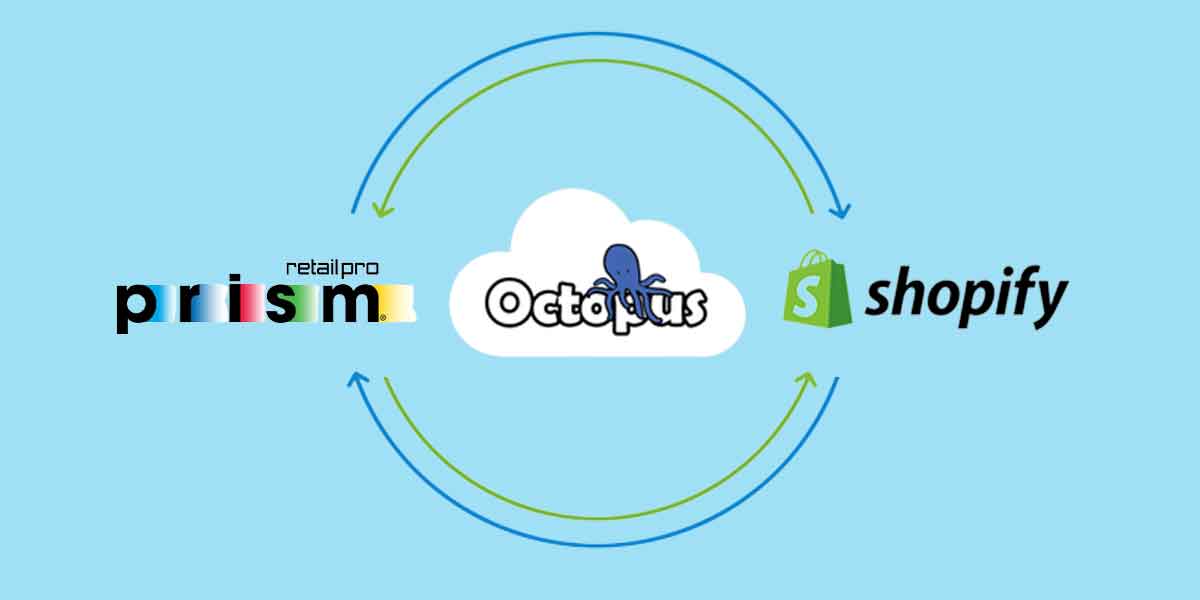
Why is this relevant to a Retail Pro Prism user? Because today’s retail success hinges on multi-channel integration, where the physical and digital spheres of commerce are seamlessly connected. Merging Retail Pro Prism’s robust POS functionalities with Shopify’s comprehensive ecommerce platform creates a retail ecosystem that is scalable, adaptable, and primed for the digital age.
The synergy between Retail Pro Prism and Shopify provides numerous benefits:
Unified Inventory Management: Centralized inventory management prevents overselling and underselling by ensuring inventory data is consistent across all sales channels. It offers a real-time view of stock levels, crucial for accurate planning and forecasting.
Enhanced Customer Experience: By combining offline and online sales data, retailers gain a 360-degree view of customers’ shopping behaviors. This integration helps create personalized marketing campaigns and improved customer service.
Streamlined Operations: Automated synchronization of data reduces manual entry errors and increases operational efficiency. It saves employees’ time, allowing them to focus on more value-added tasks.
Better Analytics and Reporting: Access to comprehensive analytics from both online and offline sales facilitates better decision-making. With all sales data in one place, retailers can generate insights about product performance, customer behavior, and overall business health.
The retail sector is no longer about operating in separate silos of brick-and-mortar stores and e-commerce websites. The integration of Retail Pro Prism and Shopify symbolizes the merging of these spheres into one holistic, agile, and customer-focused business model.
In conclusion, as the retail landscape continues to evolve in the face of booming e-commerce growth, retailers must leverage technology to their advantage. Integrating Retail Pro Prism with Shopify is not just an option; it’s a strategic necessity that assures the longevity and success of a retail business in this digital age.